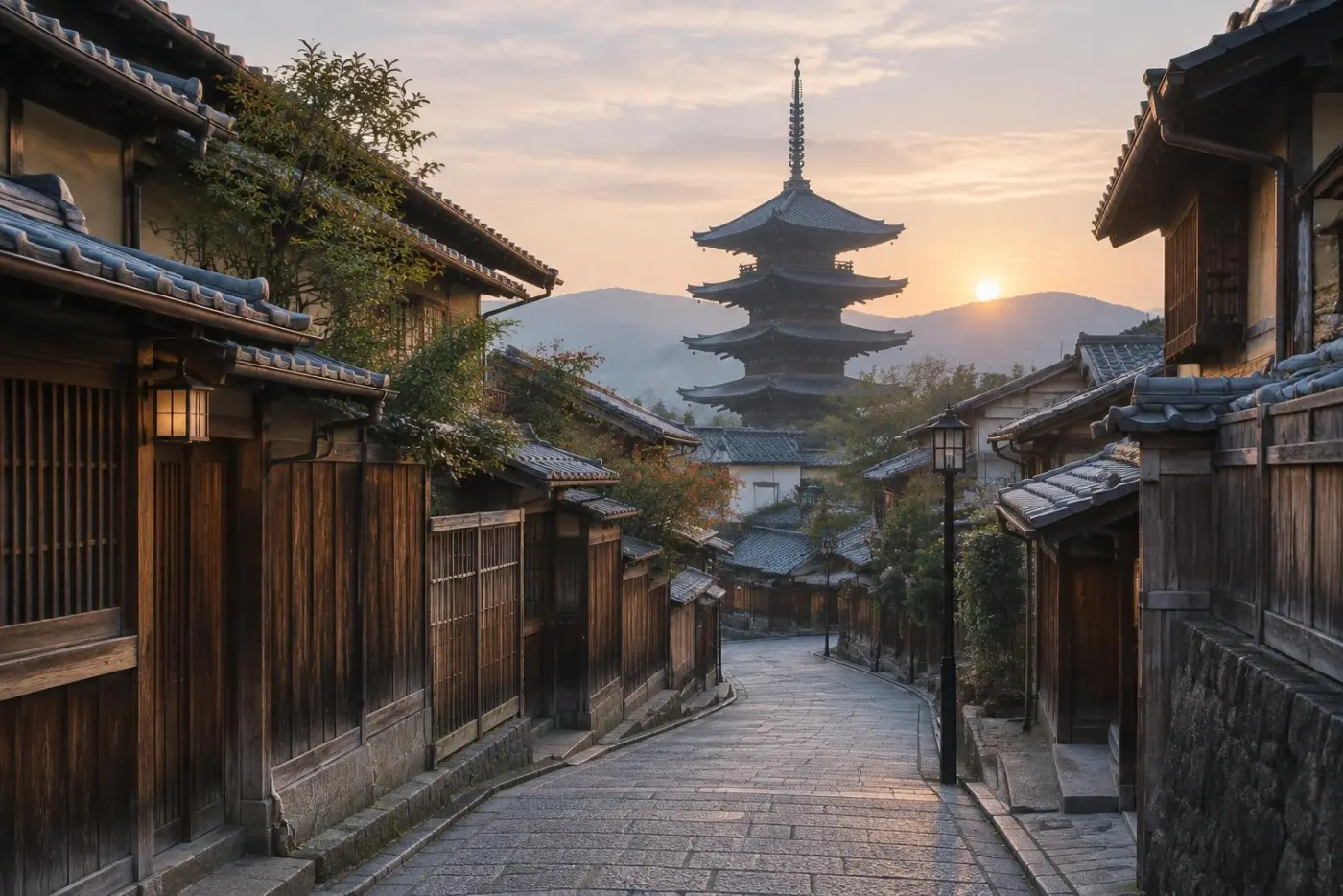
Japan is one of the easiest countries in the world to travel in once you're there — clean, safe, punctual and polite. The planning, though, rewards people who start early and keep the route simple.
When to go
Late March to mid-April brings cherry blossoms and the year's biggest crowds. Mid-October to late November has fall colors, comfortable temperatures and our favorite light. Summer is hot and humid with a rainy season in June; winter is cold but quiet and good value outside the ski areas.
Avoid Golden Week (late April to early May) and the Obon holiday in mid-August if you can — domestic travel peaks and hotels fill up.
The classic first-timer route
Tokyo, Hakone or Mount Fuji area, Kyoto, a day in Nara, and out through Osaka. It covers big city energy, nature, temples and food without spending your vacation on trains. Fly into Tokyo and home from Osaka (or vice versa) to avoid backtracking.
Trains & rail passes
The nationwide Japan Rail Pass became much more expensive in 2023, and for the classic Tokyo–Kyoto–Osaka route it often no longer pays off. For most of our first-time clients, individual shinkansen tickets are cheaper and more flexible. We run the numbers for every itinerary.
- Tokyo to Kyoto on the Nozomi shinkansen takes about 2 hours 15 minutes.
- Reserve seats on busy days; on the Tokyo–Kyoto line, seats on the right side (seat E) face Mount Fuji when traveling west.
- Send big luggage ahead with a forwarding service (takkyubin) — it's inexpensive and saves hauling bags through stations.
Money & phones
- Load an IC card (Suica, PASMO or ICOCA) — many iPhones can carry one in Apple Wallet. Use it for subways, buses, vending machines and convenience stores.
- Japan still uses cash more than the U.S. Withdraw yen at 7-Eleven or post office ATMs.
- Get an eSIM or pocket Wi-Fi before you land. Maps and translation apps are essential.
- Tipping isn't customary and can cause confusion — great service is simply expected.
Where to stay
| City | Neighborhood | Why |
|---|---|---|
| Tokyo | Shinjuku or Ginza | Transport hubs, endless food, easy for first-timers |
| Hakone | Gora or Miyanoshita | Ryokan with private onsen bath, Fuji views on clear days |
| Kyoto | Higashiyama or near Kyoto Station | Walk to temples early, or stay central for day trips |
| Osaka | Namba or Umeda | Street food, nightlife and airport access |
A realistic 12-day itinerary
- Days 1–4 · TokyoArrive and rest. Asakusa, Meiji Shrine, Shibuya, a food tour, teamLab, a day trip to Nikko or Kamakura.
- Days 5–6 · HakoneRopeway, open-air museum, lake cruise and a night in a ryokan with kaiseki dinner.
- Days 7–10 · KyotoFushimi Inari at sunrise, Arashiyama, Gion in the evening, tea ceremony, day trip to Nara.
- Days 11–12 · OsakaDotonbori street food, Osaka Castle, fly home from Kansai (KIX).
Etiquette basics
- Shoes off when you see a raised entryway or slippers lined up.
- Keep your voice down on trains and avoid phone calls.
- Carry your trash — public bins are rare.
- Onsen: wash thoroughly before entering, and towels stay out of the water.
Want help with your own Japan trip? Start with a free call.